
Kajima Supports "Tree Planting Action Project," Launches Initiative for World Bee Day (May 20)
Kajima has expressed its support for the Tree Planting Action Project which promotes environmental conservation and biodiversity*1. This project launched activities in line with World Bee Day (May 20), an international day designated by the UN. It aims to protect and nurture a rich natural environment that can sustain life in the future through small actions for environmental conservation carried out by companies, individuals, and groups.
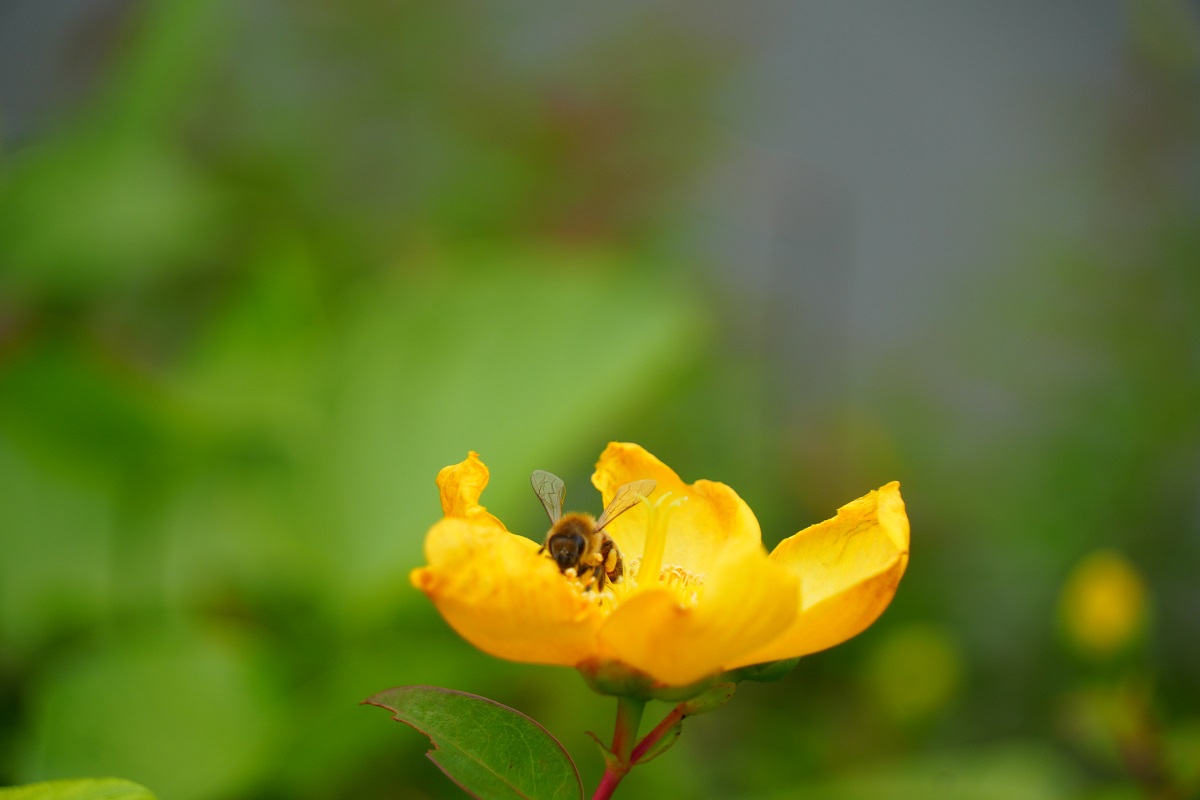
A honey bee at Akasaka Nouen
As an initial action, Kajima sowed soybean seeds, as this is one type of nectar source used by bees. During a lunch break on May 26, 2025, about 100 employees participated in a vibrant event at Akasaka Nouen*2, a vegetable garden on the roof of the Kajima KI Building (Minato-ku, Tokyo). This activity provided a valuable opportunity to connect with nature right in the heart of the city, and all participants developed a stronger interest in the environment.
Participants made holes about a centimeter deep at the grid intersections in the soil, carefully planting two seeds each at 2 cm intervals. They gently covered them with soil, pressed down firmly to prevent the soil from drying out, and finished by placing a name plate next to their work. All participants eagerly await the seeds' growth in early summer.
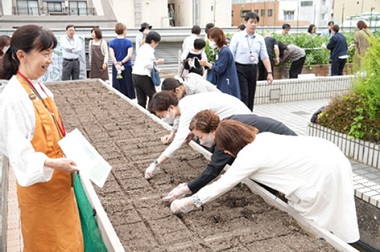
Participants planting seeds
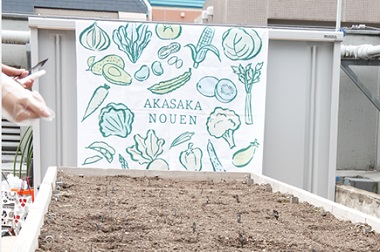
A tapestry at Akasaka Nouen
The seeds are expected to flower at the end of June. We hope that many bees will come to visit.

*1 Tree Planting Action Project
This project was launched by the TBS CSR Promotion Office alongside Yamada Bee Farm with the aim of promoting environmental conservation and biodiversity.
Sparked by International Bee Day, the project seeks to initiate small-scale actions that companies, groups, and individuals can take for environmental conservation, such as by planting trees to increase the number of locations where bees can collect nectar for their survival.
*2 Akasaka Nouen
Part of the roof area of the Kajima KI Building has been converted into a vegetable garden as part of activities to reduce environmental impact (by saving energy and absorbing CO2) while also promoting employees' health (through relaxation and interpersonal exchange).

